

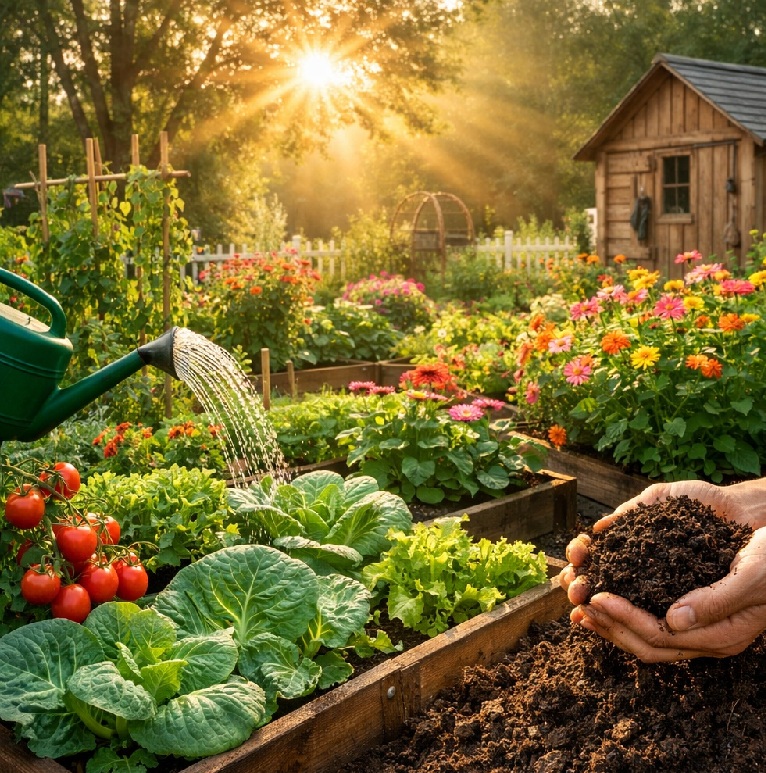

Many people believe that growing a beautiful garden requires expensive tools, fertilizers, and years of experience. In reality, some of the most productive gardens rely on simple techniques that anyone can use. Small changes in how you water, feed, and care for your plants can dramatically improve growth and yield.
Here are seven practical gardening secrets that can help your plants grow faster, healthier, and stronger.
1. Water Early in the Morning
One of the easiest ways to improve plant health is to water your garden early in the morning. When the sun is low, water has time to soak into the soil instead of evaporating quickly. Plants absorb moisture more efficiently during this time, which helps them stay hydrated throughout the day.
Morning watering also reduces the risk of fungal diseases that often appear when leaves stay wet overnight.
2. Improve Your Soil with Compost
Healthy soil is the foundation of every successful garden. Adding compost enriches the soil with organic matter and beneficial microorganisms. These nutrients help plants develop stronger roots and grow more vigorously.
You can make compost from kitchen scraps, coffee grounds, vegetable peels, and yard waste. Over time, this natural fertilizer improves soil structure and boosts plant growth.
3. Mulch to Keep Moisture in the Soil
Mulching is one of the most effective gardening tricks. A layer of organic mulch, such as straw, leaves, or bark, helps retain moisture in the soil and keeps roots cool during hot days.
Mulch also suppresses weeds that compete with your plants for nutrients and water. As organic mulch breaks down, it gradually enriches the soil with additional nutrients.
4. Give Plants Enough Space
Crowded plants compete for sunlight, nutrients, and airflow. When plants are spaced properly, they grow stronger and are less prone to disease.
Check the recommended spacing for each plant type. Vegetables like tomatoes, peppers, and cucumbers especially benefit from extra room because their roots and leaves expand quickly during the growing season.
5. Feed Plants Naturally
Instead of relying only on synthetic fertilizers, consider natural feeding options. Compost tea, diluted fish emulsion, and seaweed extract provide nutrients that plants can absorb easily.
Natural fertilizers release nutrients slowly, which supports steady growth without overwhelming the plants.
6. Remove Dead Leaves and Weak Growth
Regular pruning encourages plants to direct their energy toward healthy growth. Removing yellow leaves, damaged stems, or overcrowded branches improves airflow and sunlight exposure.
This simple habit also prevents pests and diseases from spreading through the garden.
7. Observe Your Plants Carefully
Experienced gardeners spend time observing their plants every day. Small changes in leaf color, growth patterns, or soil moisture often reveal problems before they become serious.
When you notice early signs of stress, you can adjust watering, nutrients, or sunlight conditions quickly. This attention helps plants recover faster and continue growing strong.
A Thriving Garden Starts with Simple Habits
You don’t need complicated tools or expensive products to grow a productive garden. By improving soil health, watering wisely, and giving plants proper care, you can create an environment where vegetables, herbs, and flowers flourish naturally.
With these simple gardening secrets, even beginners can turn a small backyard space into a thriving garden full of healthy plants and vibrant growth.


