


Every fall, millions of bags filled with leaves are dragged to the curb.
Gardeners often see something completely different.
Free mulch.
Free organic matter.
Free winter protection.
And eventually, something remarkably close to the rich forest-floor material plants have been growing in for thousands of years.
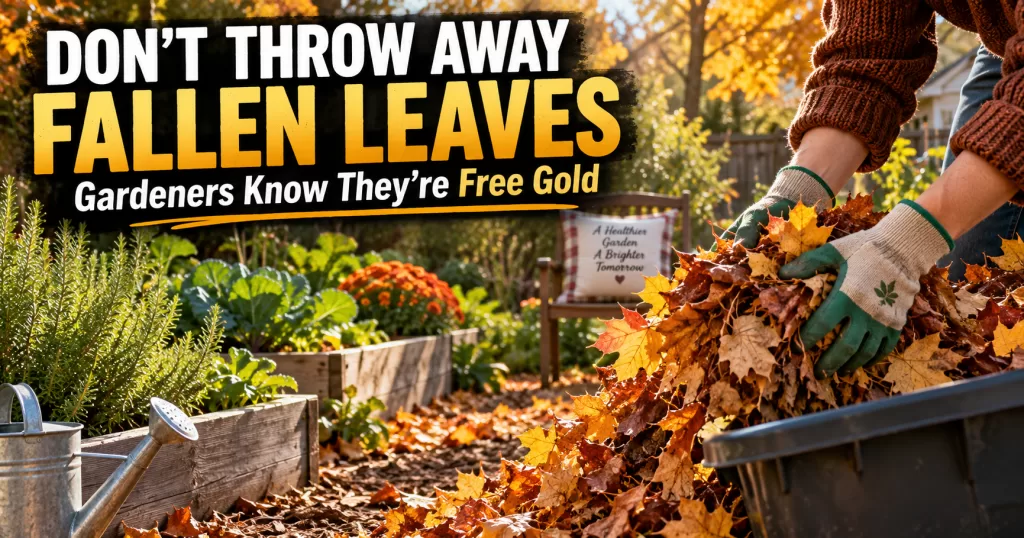
Instead of treating fallen leaves as yard waste, you can put them back to work in the garden.
Here are five easy ways to use them.
1. Shred them and use them as mulch
Whole leaves can sometimes form a dense, wet mat.
Shredded leaves are much easier to use.
Run over dry leaves with a lawn mower, then spread a layer around vegetables, shrubs, trees and perennial beds.
The shredded material helps cover bare soil, slows moisture loss and can suppress weeds.
As the leaves gradually decompose, they return organic matter to the soil.
One important rule: do not pile mulch directly against tree trunks or plant stems.
Leave a little breathing room.
2. Turn them into leaf mold
Leaf mold is one of the easiest garden materials to make.
And you barely have to do anything.
Pile damp leaves in a corner, wire cage or large breathable bag and leave them to break down.
Unlike traditional compost, leaf mold is mainly produced by fungi rather than a carefully balanced mixture of kitchen scraps and garden waste.
It takes time.
But the result is dark, crumbly material that can be mixed into soil or used as mulch.
Gardeners especially like leaf mold because it can help improve the texture and water-holding capacity of soil.
3. Add them to the compost pile
Fallen leaves are an excellent source of “brown” material for compost.
Kitchen scraps, fresh grass and other green materials are high in nitrogen.
Dry leaves provide carbon.
Mixing the two helps create a more balanced compost pile.
Keep a bag or bin of dry shredded leaves beside your compost area.
Every time you add vegetable scraps, add a handful of leaves too.
This simple habit can also help reduce odors and keep the pile from becoming too wet.
4. Protect tender plants over winter
Leaves can also act as insulation.
After the ground begins cooling, place dry shredded leaves around cold-sensitive perennials.
The goal is not to keep plants warm like a blanket inside a house.
Instead, mulch helps reduce rapid temperature swings in the soil.
This can be particularly useful around newly established plants.
Just avoid covering crowns with a heavy, soggy mass of whole leaves.
Loose material is better.
5. Leave some leaves for wildlife
Not every leaf needs to be cleaned up.
A thin layer beneath trees and shrubs can provide habitat for insects and other small creatures through winter.
Many beneficial insects spend part of their life cycle in leaf litter.
That means the perfectly spotless garden is not always the healthiest garden.
You can keep pathways and lawns tidy while leaving some natural areas beneath shrubs, hedges and trees.
It is a compromise that works for both gardeners and wildlife.
The easiest gardening material may already be falling from the trees
Garden centers sell bags of mulch, soil conditioners and compost every year.
Meanwhile, trees drop tons of organic material for free.
You do not need to save every leaf.
And diseased foliage should sometimes be removed rather than reused around susceptible plants.
But healthy leaves are too useful to automatically treat as trash.
Shred them.
Compost them.
Pile them.
Protect plants with them.
Or simply leave some where they fall.
By spring, what looked like autumn waste can already be turning into better soil.


