


The latest viral gardening trend begins with a jar.
Gardeners pour different flower seeds into it, shake them together and scatter the mixture across an open patch of soil.
There are no carefully measured rows.
There is no color chart or complicated planting plan.
The gardener waters the area and waits to see which plants survive.
The method is known as “chaos gardening,” and it has spread across TikTok and Instagram as Americans look for cheaper, less formal ways to replace empty lawns with flowers.
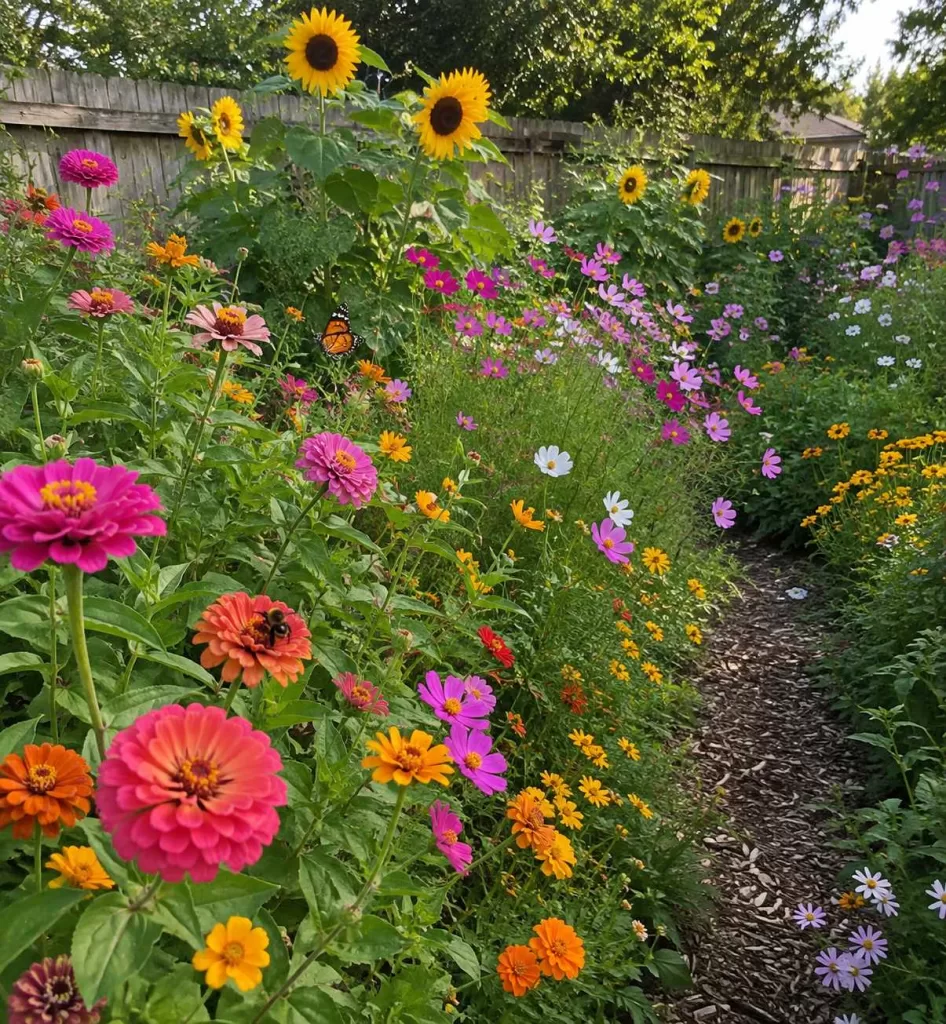
Videos show ordinary patches of soil turning into dense displays of zinnias, cosmos, sunflowers, coreopsis and native wildflowers.
One gardener’s colorful results attracted about 1.4 million views after she showed how a few minutes of seed scattering transformed her yard.
What is chaos gardening?
Chaos gardening is a deliberately unstructured planting method.
Instead of deciding exactly where every flower should grow, gardeners mix several compatible seeds and distribute them across the same space.
Sunlight, soil conditions, rainfall and competition determine which plants become dominant.
Some seeds fail.
Others appear in unexpected places.
The result resembles a natural meadow or loose cottage garden rather than a formal flower bed.
The trend has become especially popular in the United States during 2026, with strong interest reported around Washington, D.C., Austin and other cities where homeowners are also replacing parts of their lawns with native plants.
Why the trend became viral
The method creates a strong before-and-after transformation.
The first video may show only bare soil and a handful of seeds. Later updates reveal a crowded garden filled with color, bees and butterflies.
It also removes some of the pressure associated with traditional gardening.
Beginners do not need to design perfect rows or calculate the exact position of every plant. The unpredictable result is part of the appeal.
North Carolina gardener Meagan Lloyd, known online as @meggrowsplants, has described the style as a way to remove stress and bring fun back into gardening. She has become one of the recognizable creators associated with the movement.
What you need
For a small chaos garden, prepare:
- three to six packets of compatible flower seeds;
- one jar or bowl;
- a sunny patch of ground;
- a rake;
- water;
- a small amount of sand or dry compost, optional.
Choose flowers suited to the same light and moisture conditions.
Do not combine shade plants with flowers that require full sun.
For a garden intended to help wildlife, choose native species adapted to your state or region.
Good flowers for an American chaos garden
Popular choices include:
- black-eyed Susans;
- purple coneflowers;
- blanket flowers;
- coreopsis;
- native milkweed;
- cosmos;
- zinnias;
- sunflowers;
- bee balm;
- asters.
Native plants are usually the safest ecological choice because they support local pollinators and are less likely to become invasive.
Garden centers around Washington, D.C., have reported strong demand for milkweed, echinacea, black-eyed Susans, blanket flowers and coreopsis as interest in native chaos gardens has grown.
How to start a chaos garden
1. Choose a sunny area
Most wildflowers need at least six hours of direct sunlight each day.
Start with a small section of lawn, an unused border or a bare area near a fence.
The space should be easy to water while the seeds germinate.
2. Remove heavy weeds
Chaos gardening does not mean throwing seeds into thick grass and expecting a meadow.
Seeds need contact with the soil.
Remove large weeds, rake away dead vegetation and lightly loosen the top surface. You do not need to dig deeply.
3. Mix the seeds
Pour the seed packets into a jar or bowl.
For better distribution, mix small seeds with dry sand or fine compost. This prevents hundreds of tiny seeds from falling into one place.
Shake or stir the mixture.
4. Scatter them by hand
Walk slowly across the area and throw small amounts of the mixture in different directions.
Avoid emptying the entire container in one spot.
Pass over the area twice, first from one direction and then from another.
5. Press the seeds into the soil
Use the back of a rake, a flat board or your shoes to press the seeds gently against the ground.
Do not bury them deeply unless the packet instructions specifically require it.
Many wildflower seeds germinate best close to the surface.
6. Water carefully
Use a gentle spray so the seeds are not washed away.
Keep the top layer of soil consistently moist until germination. Depending on the flower species and weather, this may take several days or several weeks.
The biggest mistake
The word “chaos” can be misleading.
Throwing random seed packets into an established lawn may produce almost nothing. Thick grass prevents seeds from reaching the soil, while incompatible plants may struggle under the same conditions.
Experts recommend creating “controlled chaos.”
Choose plants suitable for the climate, prepare the ground and avoid invasive species. Garden professionals in Washington and Texas have warned that the best results still require some planning, particularly in areas affected by drought or unpredictable weather.
Avoid invasive seed mixes
Some inexpensive wildflower packets contain species that may spread aggressively outside gardens.
Read the full ingredient list rather than relying only on the words “wildflower mix.”
A plant considered harmless in one state may be invasive in another.
The Lady Bird Johnson Wildflower Center and local native-plant organizations can help American gardeners identify species suitable for their area. Experts discussing the trend have stressed that a spontaneous design should not come at the expense of local biodiversity.
Does the garden need maintenance?
Yes, but usually less than a formal flower bed.
During the first season, gardeners may need to:
- water during dry periods;
- remove aggressive weeds;
- thin crowded seedlings;
- support tall sunflowers;
- cut back diseased plants;
- prevent unwanted species from producing seeds.
At the end of the season, some flowers can be left standing to provide seeds and shelter for birds and insects.
Self-seeding varieties may return the following year in new positions.
Why pollinators benefit
A dense mixture of flowers can provide nectar and pollen across a longer season.
Different flower shapes attract different insects. Milkweed supports monarch butterflies, while coneflowers, asters, bee balm and black-eyed Susans attract bees and other pollinators.
The irregular structure also offers more shelter than a closely mowed lawn.
This environmental benefit has helped chaos gardening move beyond a visual social-media trend. Many American homeowners are using it as an accessible first step toward native landscaping.
A garden designed by chance
Chaos gardening does not guarantee that every seed will grow.
That is the point.
One corner may become filled with cosmos. Sunflowers may rise above everything else. Smaller native flowers may appear later, after the first wave begins to fade.
The gardener provides the seeds and prepares the ground.
Nature decides the final arrangement.
What begins as five minutes of scattering can become a garden that changes every week of the growing season.


