

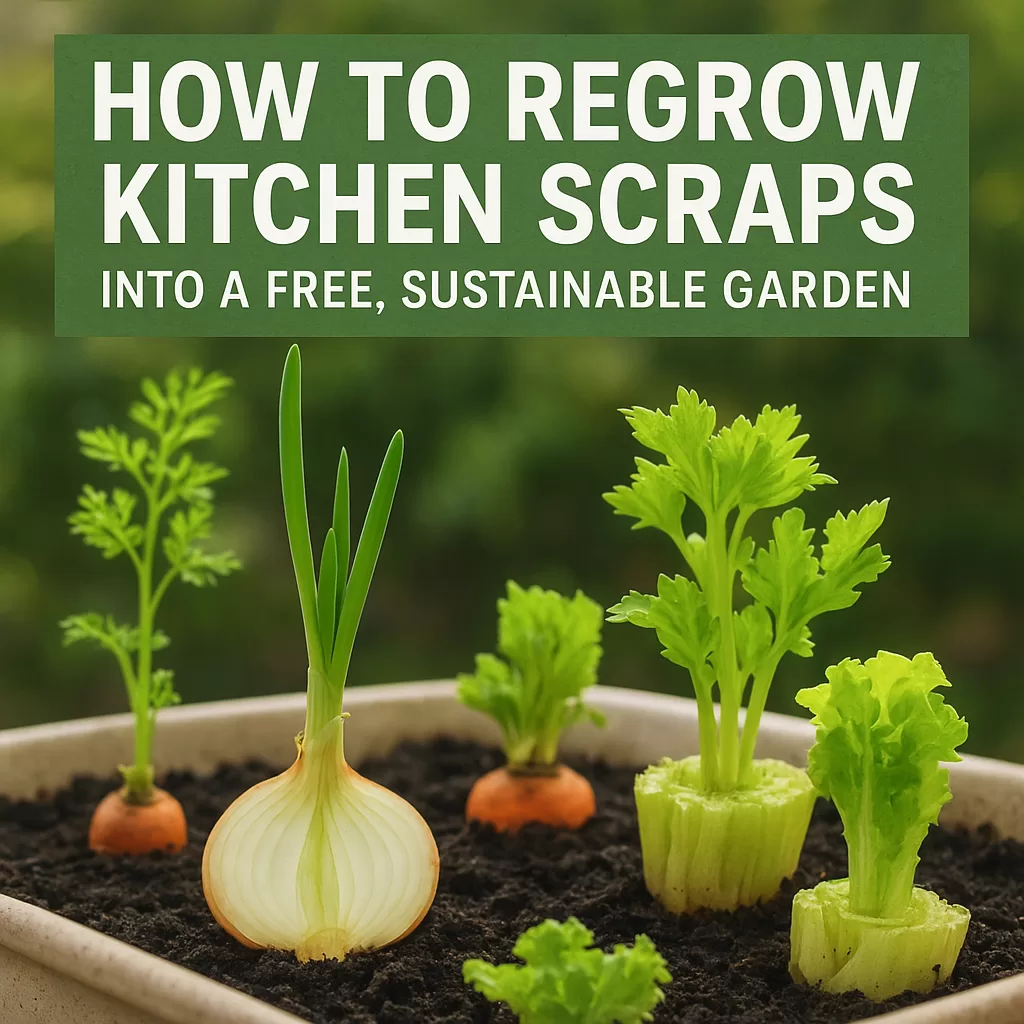

Turn Everyday Kitchen Scraps Into a Thriving, Free Garden
Growing your own fresh produce at home doesn’t have to start with seeds or expensive supplies. In fact, many kitchen scraps you’d normally toss out can be transformed into flourishing plants with just water, soil, and a bit of patience. By regrowing food like green onions, potatoes, garlic, and lettuce from scraps, you save money, reduce waste, and create a sustainable source of fresh veggies right in your kitchen or backyard.
In this guide, we’ll walk you through a simple step-by-step process to regrow common foods, avoid common beginner mistakes, and enjoy the satisfaction of harvesting homegrown produce.
Why Regrow Food from Kitchen Scraps?
Save Money and Reduce Waste
Instead of throwing away vegetable ends, stalks, and peels, regrowing food helps you get more out of every purchase. This approach cuts down grocery bills while drastically reducing food waste.
Easy and Accessible Gardening
You don’t need a large garden or special equipment to start. Many household scraps regrow well indoors or in small containers, making gardening accessible even in apartments.
Freshness and Health
Homegrown vegetables are fresher and usually free from pesticides. Plus, the ability to harvest as needed ensures peak flavor and nutrition.
Step-by-Step Guide to Regrowing Common Vegetables
1. Green Onions
What you need: A small glass or jar, water, green onion scraps with roots.
- Cut green onions about 2 inches from the roots.
- Place the root ends in a glass with enough water to cover the roots.
- Position the glass in a sunny window.
- Change the water every 2-3 days to prevent mold.
- Watch for green shoots to regrow, trimming and enjoying fresh green onions as needed.
- Once roots and shoots are strong, you can transfer to soil for longer growth.
2. Potatoes
What you need: A potato with visible “eyes,” a container with soil.
- Cut a potato into chunks ensuring each piece has at least one eye.
- Let the cut pieces dry for a day to avoid rot.
- Plant the chunks about 4 inches deep in a pot or garden bed filled with loose soil.
- Keep the soil moist and place in a spot with good indirect sunlight.
- As sprouts appear, continue adding soil around growing stems (hilling).
- Harvest when plants flower and the foliage starts to yellow.
3. Garlic
What you need: Garlic cloves, pot or garden soil.
- Break apart a garlic bulb, keeping the skin on each clove.
- Plant cloves with the pointed end up, about 2 inches deep in soil.
- Leave space between cloves to allow growth.
- Water lightly and keep in a sunny spot.
- Shoots will emerge in 1-2 weeks and can be trimmed for garlic greens.
- Bulbs take several months to develop fully—harvest when leaves turn brown.
4. Lettuce
What you need: Lettuce base (about 2 inches from the bottom), container, water or shallow soil.
- Cut off the bottom of the lettuce head, leaving around 2 inches.
- Place the base in a shallow bowl with about half an inch of water.
- Keep it near a window with good light.
- Change water every couple of days to avoid stagnation.
- New leaves will sprout from the center in around a week.
- Transplant into soil for faster and larger growth or continue harvesting leaves for salads.
Tips to Avoid Common Beginner Mistakes
- Don’t Forget Water Changes: Stagnant water quickly breeds bacteria or mold; refreshing water regularly is essential.
- Avoid Overwatering in Soil: While moisture is important, soggy soil leads to rot—ensure well-draining containers.
- Use the Right Light: Most regrowing plants thrive with indirect sunlight. Too much direct sun may scorch tender shoots.
- Be Patient: Some plants, like potatoes and garlic, take longer to develop; rushing the process can cause disappointment.
- Choose Healthy Scraps: Start with fresh, firm scraps free of mold or damage for the best chance of success.
Benefits of a Sustainable Kitchen Scrap Garden
By turning everyday food scraps into new plants, you create an ongoing cycle that nurtures your home and cuts your environmental footprint. This sustainable gardening practice:
- Builds a connection to your food source.
- Provides a continuous supply of fresh, organic produce.
- Educates children and family members on the value of recycling and growing food.
- Encourages mindful consumption and zero waste habits.
Conclusion
Transforming green onions, potatoes, garlic, lettuce, and other kitchen scraps into a thriving garden is simple, rewarding, and eco-friendly. With just a little care and these easy steps, you can start growing food for free at home, save money, reduce waste, and enjoy the freshest flavors your kitchen can offer. Whether you’re a seasoned gardener or a curious beginner, give your scraps new life—and watch your sustainable garden flourish.


