


5 Vegetables You Can Grow in Buckets (Even Without a Garden)
Gardening is a rewarding hobby that offers fresh, homegrown produce and a delightful connection to nature. But what if you don’t have a garden or outdoor space? The good news is, you can grow plenty of vegetables in buckets right on your balcony, patio, or even indoors. Bucket gardening is an easy and space-saving way to cultivate your own food, no matter your living situation.
In this article, we’ll explore five vegetables you can grow in buckets and share tips to help you get started with this simple form of container gardening.
Why Choose Buckets for Growing Vegetables?
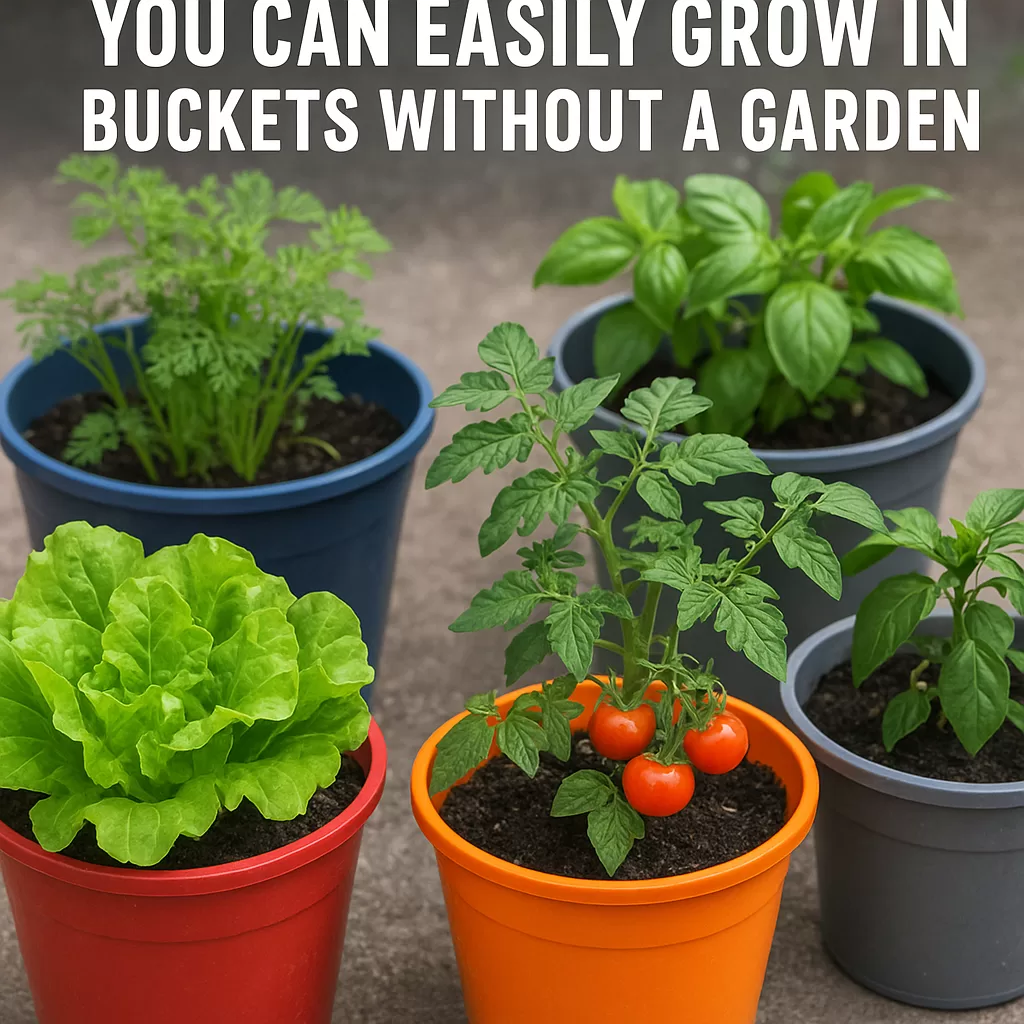
Buckets are a fantastic choice for container gardening because they are:
- Affordable and easy to find.
- Portable, allowing you to move plants for optimal sunlight.
- Deep and spacious, giving roots room to grow.
- Versatile, suitable for balconies, porches, and small indoor spaces.
With proper drainage and the right soil, buckets can create a perfect mini garden anywhere.
1. Tomatoes
Tomatoes are among the most popular vegetables grown in buckets, and for good reason. They thrive in containers and reward you with juicy, flavorful fruit throughout the growing season.
How to Grow Tomatoes in Buckets
- Use a 5-gallon bucket or larger.
- Drill several drainage holes in the bottom.
- Fill with quality potting mix rich in organic matter.
- Choose determinate (bush) varieties for bucket gardening.
- Provide a cage or stake for support.
- Water regularly, keeping soil moist but not soggy.
- Place in a sunny spot with at least 6-8 hours of direct sunlight.
2. Leafy Greens (Lettuce, Spinach, Kale)
Leafy greens are excellent for bucket growing because they have shallow roots and mature quickly.
Growing Tips for Leafy Greens in Buckets
- Use smaller buckets (1-3 gallons) with drainage holes.
- Fill with a light, well-draining potting mix.
- Sow seeds directly or transplant seedlings.
- Keep soil consistently moist.
- Provide partial to full sunlight (4-6 hours).
- Harvest leaves regularly for continuous growth.
3. Carrots
Carrots are surprisingly easy to grow in buckets if you choose the right container and soil.
How to Successfully Grow Carrots in Buckets
- Use deep buckets (5-gallons or bigger) with good drainage.
- Fill with loose, sandy, well-draining soil to allow root expansion.
- Remove any rocks or clumps to avoid deformed roots.
- Sow carrot seeds thinly on soil surface and cover lightly.
- Keep soil moist until germination.
- Place bucket in full sun (6-8 hours).
- Harvest when carrots reach desired size (usually 2-3 months).
4. Peppers
Peppers flourish in buckets and can add color, flavor, and spice to your meals.
Growing Peppers in Buckets
- Use 3-5 gallon buckets with drainage holes.
- Plant pepper seedlings rather than seeds for quicker results.
- Use rich, well-draining potting soil.
- Provide plenty of sunlight (6-8 hours daily).
- Water regularly but avoid overwatering.
- Fertilize every couple of weeks with a balanced fertilizer.
- Support plants with sticks if needed as they grow.
5. Green Beans
Green beans are a prolific, fast-growing vegetable that adapts well to container life.
Tips for Growing Green Beans in Buckets
- Use 5-gallon buckets for space.
- Ensure drainage holes are present.
- Fill with lightweight potting soil.
- Choose bush varieties for container gardening.
- Sow seeds about 1 inch deep.
- Water consistently to keep soil moist.
- Position bucket in full sun (6+ hours).
- Harvest beans regularly to encourage continuous production.
Essential Bucket Gardening Tips
Regardless of which vegetable you choose, keep the following in mind:
- Drainage is crucial. Always drill holes to prevent waterlogging.
- Use high-quality potting mix. Avoid using garden soil as it compacts and drains poorly.
- Water consistently. Containers dry out faster than garden beds.
- Fertilize periodically. Potted plants need extra nutrients.
- Rotate crops. To avoid soil depletion and pests, change what you plant each season.
- Watch for pests. Inspect your plants regularly and use organic pest control when necessary.
Final Thoughts
Growing vegetables in buckets is an excellent way to enjoy fresh, homegrown produce without needing a traditional garden. Whether you live in an apartment, have limited outdoor space, or simply want to start small, bucket gardening can be a fun and manageable introduction to growing your own food.
Try starting with these five vegetables — tomatoes, leafy greens, carrots, peppers, and green beans — and discover the joy of gardening right from your bucket. With a little care and attention, you’ll soon be harvesting your own healthy, delicious vegetables!


