


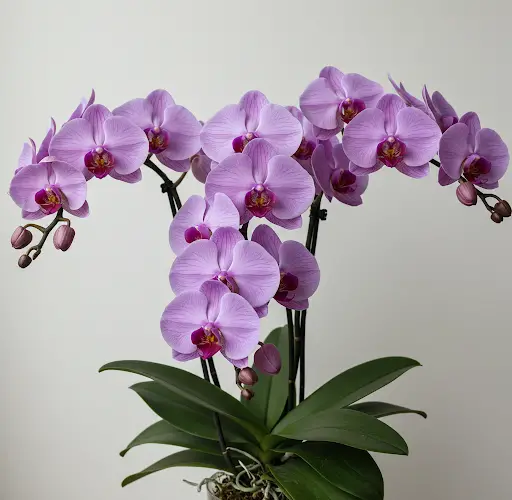
How to Support Orchid Blooming and Root Growth
If an orchid has not bloomed for a long time or produces only a few flowers, the cause is usually linked to nutrition, temperature, or watering. With proper care and balanced feeding, flowering and root development can improve steadily.
Homemade Fertilizer with Banana Peel and Eggshell
This natural fertilizer provides potassium and calcium, two elements important for flower production, root strength, and overall plant health.
Ingredients:
Banana peel from one banana
Shells from two eggs
1 liter of boiling water
Additional 400 ml of water after filtering
Preparation
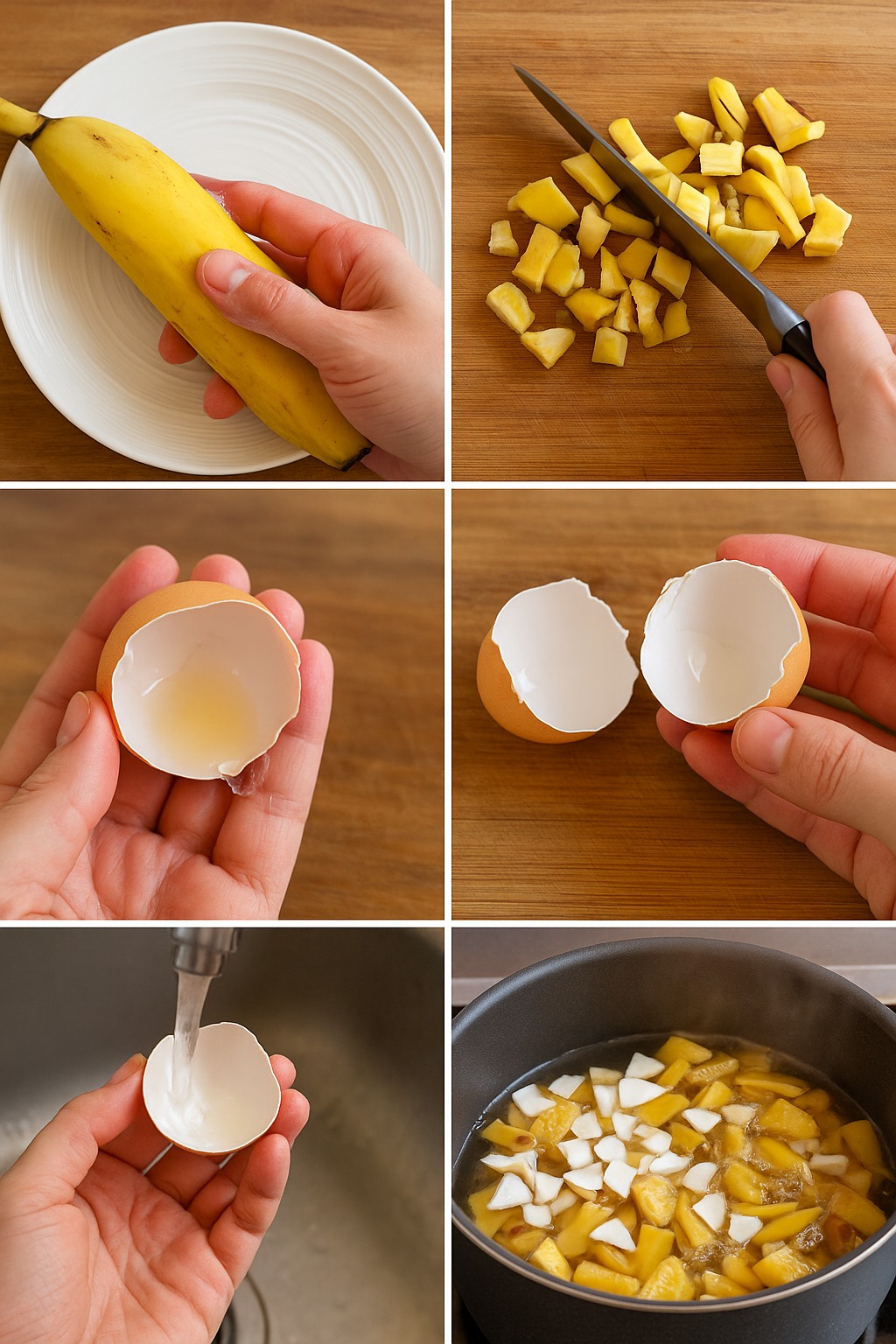
Wash the banana thoroughly to remove surface residues. Cut the peel into small pieces so nutrients release more easily.
Rinse the eggshells well and remove the inner membrane. Break the shells into small fragments.
Place banana peels and eggshells into a pot. Pour 1 liter of boiling water over them and boil for 10 minutes.
Turn off the heat and allow the liquid to cool completely.
Strain the liquid to remove solids. You should obtain about 600 ml of extract. Add 400 ml of clean water to reach 1 liter.
Application
Dosage: Use 8 tablespoons of solution per orchid pot.
Frequency: Apply once per month.
After application: Any liquid that collects in the saucer can be left to absorb naturally during the day.
This solution may also be used on other flowering houseplants.
Environmental Factors That Encourage Flowering
Temperature variation:
Orchids respond well to mild temperature differences between day and night. A slightly cooler environment at night can stimulate flower spike formation.
Roots and leaves:
Strong roots and firm green leaves are necessary for flowering. Yellowing leaves often signal stress from poor nutrition, excess water, or insufficient light. Correcting these factors usually restores growth.
Proper watering:
Root color is a reliable guide:
Gray or silvery roots indicate the plant needs water.
Green roots mean moisture is already sufficient.
Use about 100 ml of water per pot during regular watering and allow excess to drain fully.
Ongoing Care
After applying fertilizer, monitor root color, leaf firmness, and new growth. Improvements appear gradually over several weeks. Consistent light, controlled watering, and proper nutrition are more effective than frequent interventions.
With steady care, new flower spikes develop naturally, followed by regular blooming throughout the growing season.


